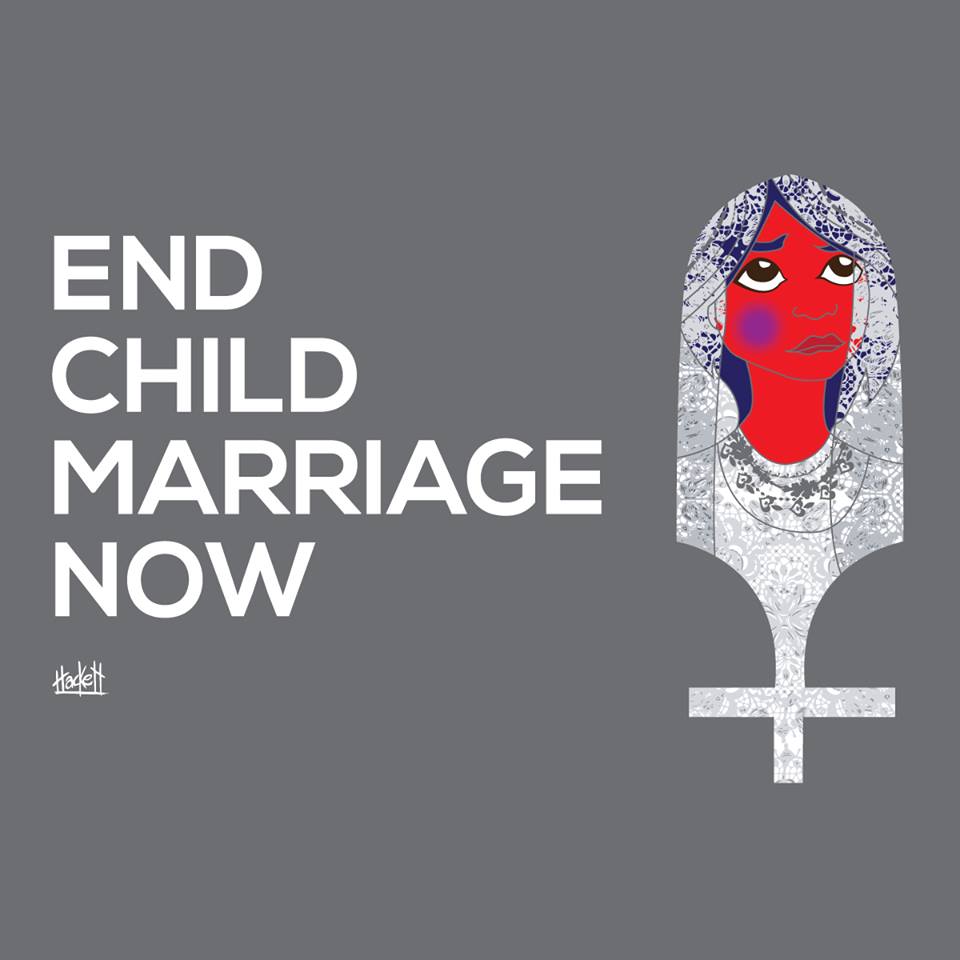
For many young people, national legislation that makes provisions for child marriage in Trinidad and Tobago seems to be like an issue that came out of nowhere. This is highly possible in a society that prides itself multicultural and multi-ethnic but there is as a popular caution – “Do not talk religion and politics.” What this does is suppress public discourse, restrict knowledge sharing and understanding of the diversity of human life in Trinidad and Tobago and ultimately leave the prejudices of religious and political authorities unchecked.
Before Brother Harrypersad Maharaj’s laughable and anachronistic remarks that uphold the practice of child marriage, there was a movement of activists, lone voices and soldiers in the women’s rights movement collecting data, publicly consulting and petitioning politicians to take action to end it. Picture Amrika Tiwary in the 1990s, Brenda Goopesingh distributing booklets Hinduism – An Overview and Rejecting Violence Against Women (2011), Verna St.Rose-Greaves getting the facts and telling a nation that this trend needs to stop, and Helen Drayton from an independent bench drafting child protection laws. Picture the faces of these women who have raised this issue when people thought there were “bigger fish to fry.”
Why is this issue so important now? The Inter Religious Organisation of Trinidad and Tobago (IRO) infuriated large sections of the public with their recent ‘unanimous’ decision on their support for the furtherance of child marriage in our Republic.
(Interestingly, their views on reproductive rights and the criminal justice system have undergone less/no scrutiny).
What is clear by the statements of the religious leaders who advocate child marriage or urge people to recognise the “pros” of child marriage is that a lot of it stems from a respectability politics, anxiety around shame brought on to the family in the cases of teenage pregnancy, and the out right (and typical) girl-blaming in a patriarchal society.
On a morning television interview with Hema Ramkissoon, representatives of the IRO defended their positions in support of child marriage and rejected any meaningful discussion on the protection of the child. Their main focus was on their cultural power as religious bodies in national affairs.
Brother Harrypersad Maharaj
President, IRO
“We know what the society is today. If a young person under the age of eighteen for example should get pregnant then they have the option, because they can’t commit divorce, what do you want them to do then? They can’t divorce. They don’t have an option of marriage which is “parental support”. What will that young person do…commit suicide? “
Imam Haji Afzal Mohammed
First Vice President, IRO
“The bigger issue is…according to the report, that last year 1,300 girl children became pregnant. Did they get married? Were they married? What are we going to do? According to the law it not permissible to have an abortion. If they reach that stage, what will happen? Suicide!”
Archbishop Barbara Gray-Burke
Spiritual Baptist Representative, IRO
“Are we going to go secular? We look at the countries that give rise to same-sex marriage, how it being destroyed? So better spirituality stay in our country than we move over to secular…A move is on now to destroy the religious bodies.”
“Let us face the facts, we have unemployment, with the unemployment poverty is going to step in. If the African community dig in more in family life we would not have so much young women, single parents, only shacking up, shacking up and getting children.”
To be clear, it is counterproductive to share the “my religion is better than yours” trope on Facebook in light the dissenting religious voices such as Archbishop Harris of the Roman Catholic Church, the leadership in the Anglican Church, et al. who have challenged the prepotent and harmful reasonings of the IRO on this matter. Our focus at this time, however, should be on challenging the political endowment of religious leaders outsized influence in shaping public policy in a manner that denies the human rights of children, especially our girls. The alarming silence of state leadership, ruling-party and opposition, perhaps is an indicator of the tied-hands many have in this matter of political calculation and political constituency.
The subtext of the this development problem is that child marriage involves the oppression of children and girls. For this reason, we are called to target our activist energies on institutions of the state and not the arbiters of sin.
The four Marriage Acts of this land that run contrary to the aims of the Sexual Offences Act, Conventions on the Child, and Convention on the Elimination of Discrimination Against All Forms of Discrimination Against Women will be transformed in parliament and nowhere else.
We could school the prejudiced on Facebook but we must advocate, agitate and petition for new legislation in parliament. Culture is not the hiding place for oppression. Culture cannot be a cloak for oppression. We need greater harmony across legislation to protect our children if we want greater harmony in our society.
You are welcome to review an earlier petition by the Hindu Women’s Organisation – Petition to Amend the Marriage Acts of Trinidad and Tobago.
In her blog, Dr. Gabrielle Hosein wrote:
“We’ve dealt with girls’ greater vulnerability to early sexual initiation by denial of the importance of sexual education through our school system. How else to protect our nation’s girls but with information about their bodies, health, safety, rights, options and sources of services and support? Learning how to make and live those decisions best for your future as a growing girl is a better solution to teen pregnancy than marriage.”
In November 2011, the Institute for Gender and Development Studies hosted a public forum, “Is it Better for Girls to Marry? Who Decides?” at UWI St. Augustine Campus. The panel discussion includes Prof. Rhoda Reddock, Gaietry Pargass, Nafeesa Mohammed, Dr. Jacqueline Sharpe and Carol Jaggernauth.
Blog Feature Image by James Hackett, 2016


2 thoughts on ““Do Not Talk Religion and Politics”: Ending Child Marriage in Trinidad and Tobago”
Comments are closed.